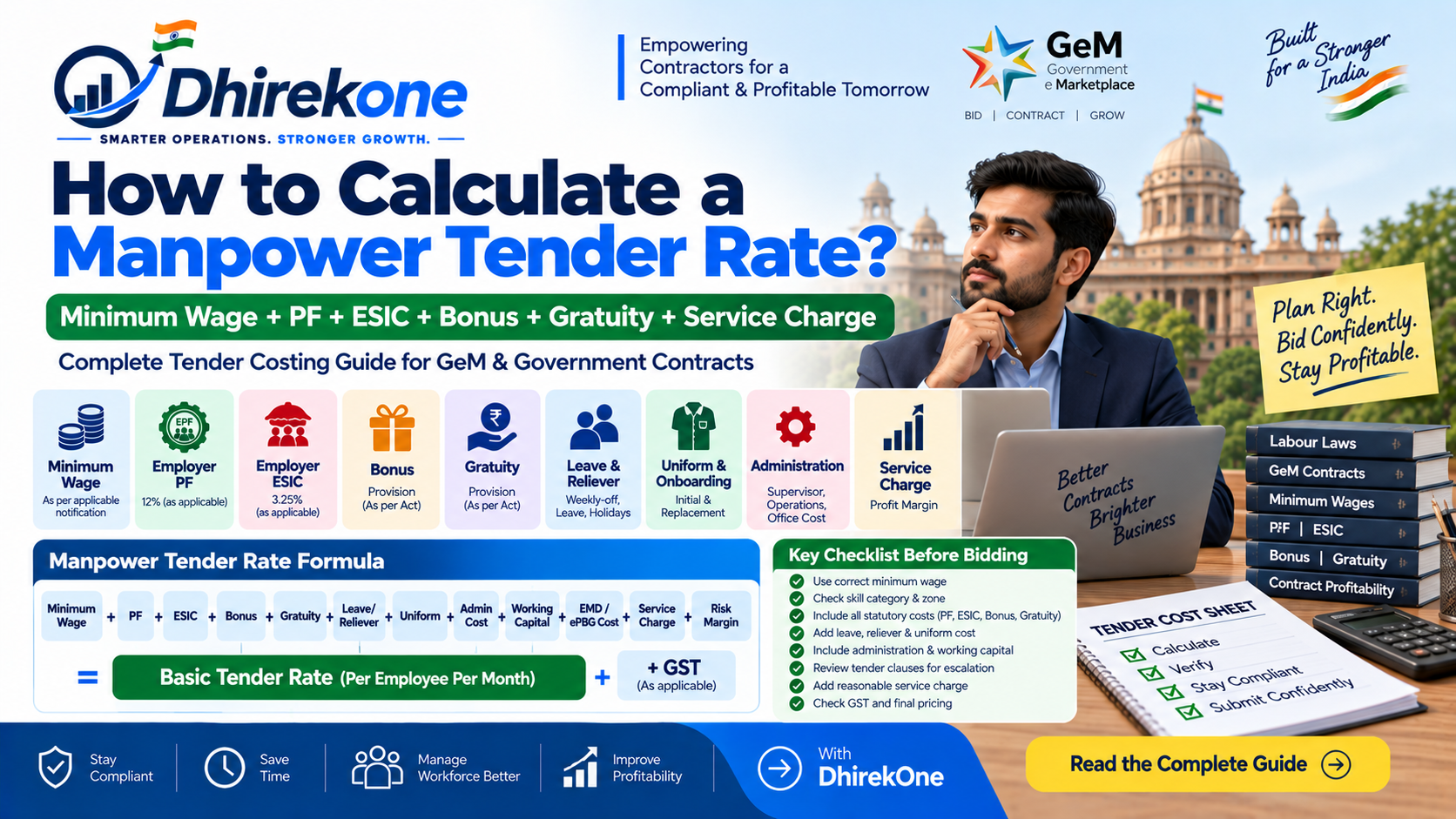
MAIN FORMULA BLOCK
Manpower Tender Rate Formula
Applicable Minimum Wage
- Employer PF
- Employer ESIC
- Bonus Provision
- Gratuity Provision
- Leave / Reliever Cost
- Uniform / Onboarding Cost
- Supervisor / Operational Cost
- Administration
- Working Capital & Banking Cost
- EMD / ePBG Cost
- Risk Provision
- Service Charge / Profit = Basic Tender Rate
Then add applicable GST as per the tender pricing structure.
KEY ARTICLE STRUCTURE
Use these headings in order:
- Minimum Wage Is Only the Starting Point
- Step 1: Identify the Correct Minimum Wage
- Step 2: Check Skill Category and Zone
- Step 3: Add Employer PF
- Step 4: Add Employer ESIC
- Step 5: Add Bonus Provision
- Step 6: Add Gratuity Provision
- Step 7: Add Weekly-Off and Reliever Cost
- Step 8: Add Leave and Holiday Cost
- Step 9: Add Uniform and Employee Onboarding
- Step 10: Add Supervisor and Administration Cost
- Step 11: Add Working Capital Cost
- Step 12: Add EMD / ePBG and Banking Cost
- Step 13: Add Service Charge
- Step 14: Add Risk and Profit Margin
- Step 15: Check GST
- Practical Manpower Tender Calculation Example
- Common Costing Mistakes
- Manpower Tender Costing Checklist
- How DhirekOne Helps Contractors Calculate and Track Profitability
PRACTICAL EXAMPLE
Illustrative Manpower Tender Cost
Monthly Wage = ₹20,000
Employer PF = ₹2,400
Employer ESIC = ₹650
Bonus Provision = ₹1,000
Gratuity Provision = ₹962
Reliever / Leave Provision = ₹1,200
Uniform / Onboarding = ₹300
Administration = ₹600
Working Capital / Bank Cost = ₹300
Risk Provision = ₹300
Total Estimated Cost:
₹27,712
Assume Service Charge / Commercial Margin:
₹1,388
Basic Tender Rate:
₹29,100 per employee per month
GST should then be applied according to the applicable tender and tax treatment.
Note: This is an illustrative costing example only. Actual statutory and contractual rates must be verified for each tender.
IMPORTANT SEO BOX
Service Charge Is Not the Same as Profit
A 5% service charge does not necessarily mean 5% net profit.
The service charge may still need to cover:
- Recruitment
- Payroll
- Compliance
- Employee replacement
- Office expenses
- Software
- Banking charges
- Working capital
- Travel
- Management cost
Actual profit is what remains after all contract expenses are paid.