
How to Know If a Government Manpower Contract Is Profitable or Loss-Making?
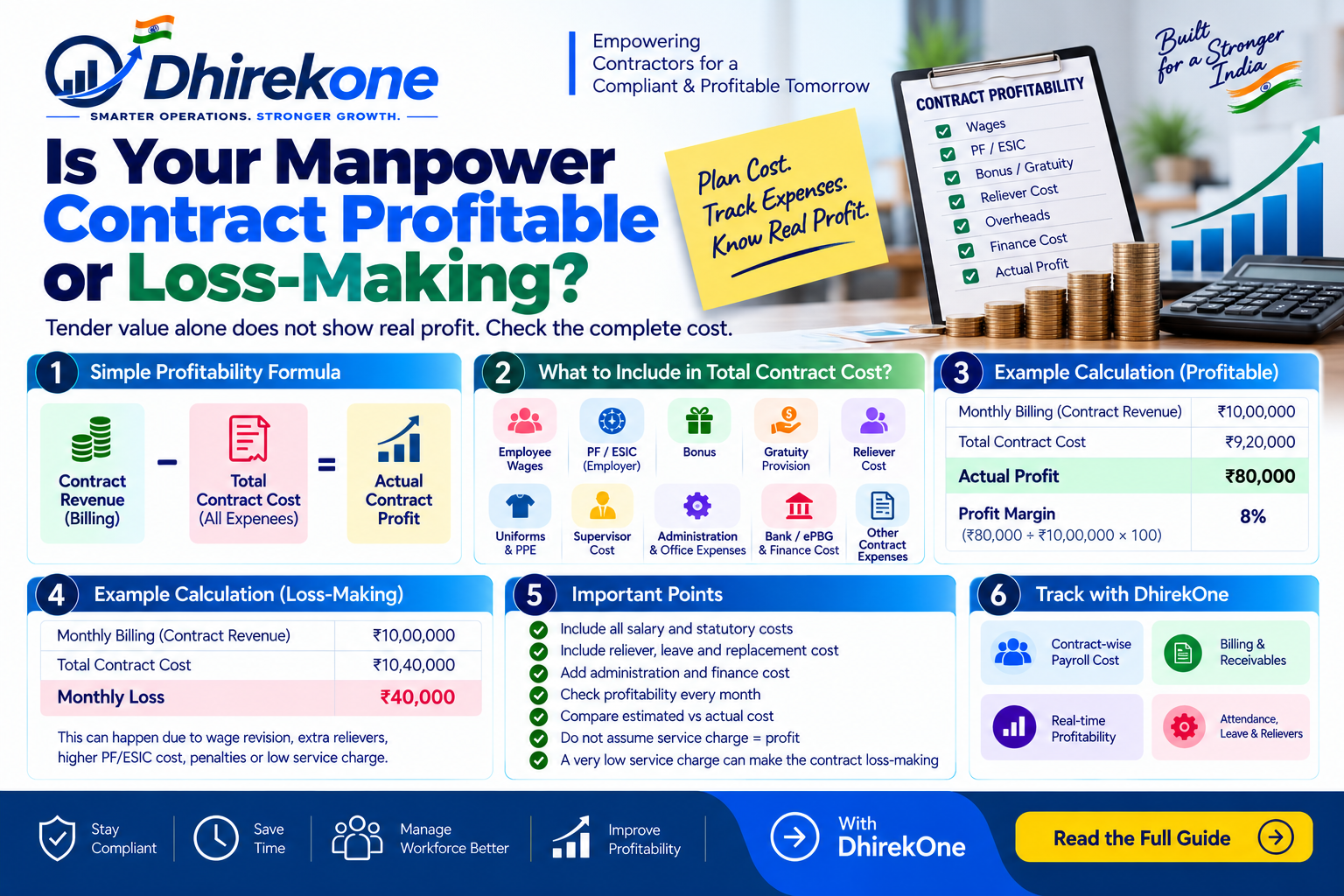
A contract is profitable only when total revenue is higher than wages, PF, ESIC, bonus, gratuity, reliever cost, overheads, finance cost and other contract expenses. Tender value alone does not show real profit.
In this article
ARTICLE CONTENT
How to Know If a Government Manpower Contract Is Profitable or Loss-Making?
Do not calculate profit only as:
Billing
Employee Salary
The correct calculation should include the complete contract cost.
Simple Formula
Contract Revenue
Total Contract Cost
Actual Contract Profit
What Is Total Contract Cost?
Include:
- Employee wages
- Employer PF
- Employer ESIC
- Bonus
- Gratuity
- Leave / reliever cost
- Uniforms
- Supervisor cost
- Administration
- Bank / ePBG cost
- Working capital cost
- Other contract expenses
Example
Monthly Billing: ₹10,00,000
Total Monthly Contract Cost: ₹9,20,000
Actual Profit:
₹10,00,000 - ₹9,20,000 = ₹80,000
Profit Margin:
₹80,000 ÷ ₹10,00,000 × 100 = 8%
When Is a Contract Loss-Making?
Example:
Monthly Revenue: ₹10,00,000
Actual Cost: ₹10,40,000
Monthly Loss: ₹40,000
This can happen because of:
- Minimum wage revision
- Extra relievers
- Delayed buyer payment
- Higher PF / ESIC cost
- Penalties
- Unplanned overtime
- Low service charge
Important
Check profitability every month, not only when bidding.
Compare:
Estimated Tender Cost vs. Actual Payroll & Expenses vs. Actual Billing vs. Payment Received
Conclusion
A contract is profitable only when actual revenue is higher than the complete cost of execution.
DhirekOne helps contractors track contract-wise payroll, billing, receivables and profitability in one connected workflow.