
What Is VDA in Minimum Wages?
VDA, or Variable Dearness Allowance, is a component of minimum wages that changes periodically based on inflation and the applicable consumer price index. When VDA changes, employee wages and the contractor’s payroll cost may also change.
In this article
ARTICLE CONTENT
What Is VDA in Minimum Wages?
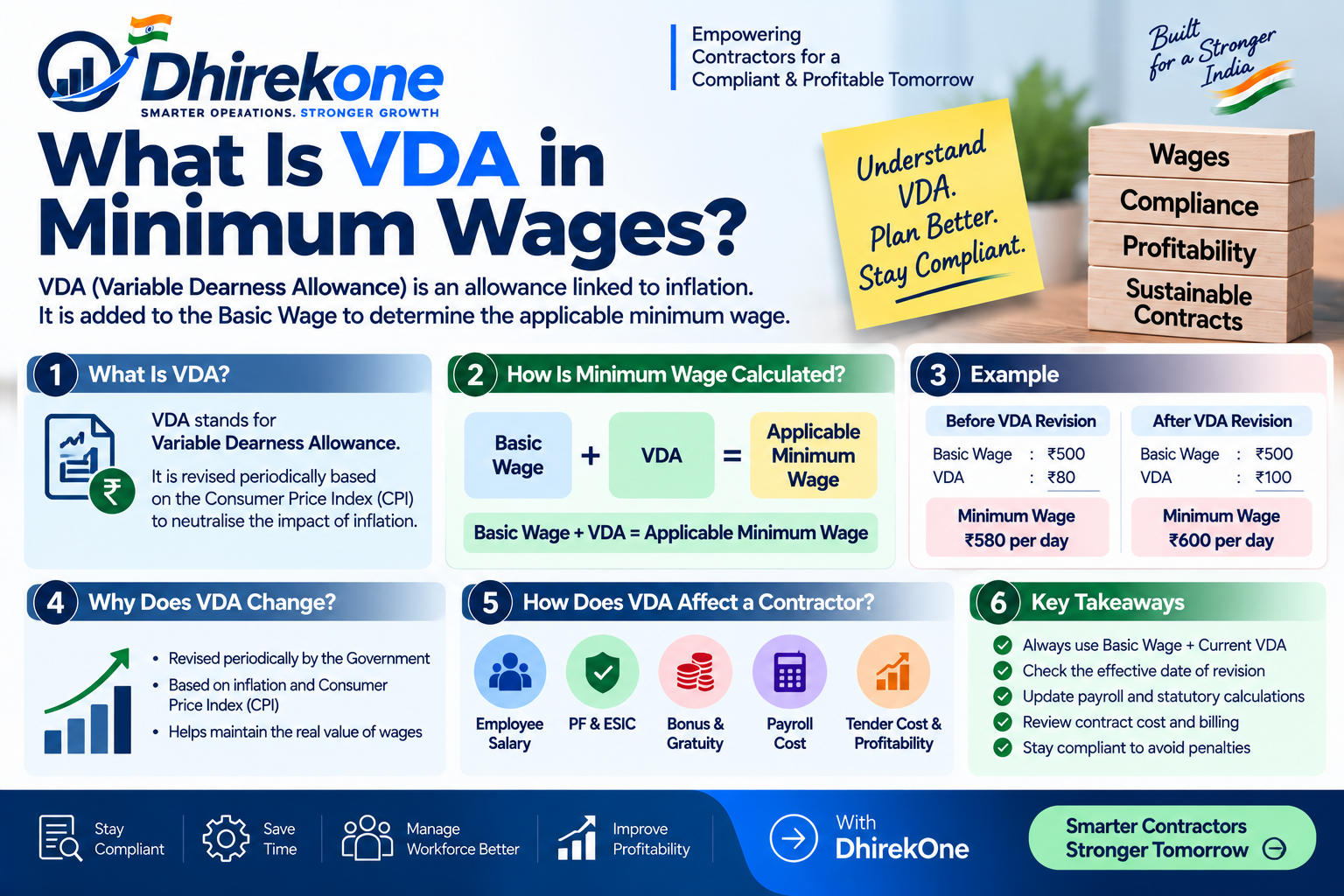
VDA stands for Variable Dearness Allowance.
It is an allowance linked to inflation and is commonly added to the Basic Wage to determine the current applicable minimum wage.
Simple formula:
Basic Wage + VDA
Applicable Minimum Wage
Why Does VDA Change?
VDA is revised periodically based on changes in the applicable Consumer Price Index.
When inflation rises, VDA may increase.
That means the employee’s minimum payable wage can also increase.
Example
Basic Wage = ₹500 per day
VDA = ₹80 per day
Applicable Minimum Wage:
₹500 + ₹80 = ₹580 per day
If VDA later increases to ₹100:
New Minimum Wage:
₹500 + ₹100 = ₹600 per day
How Does VDA Affect a Contractor?
A VDA increase can affect:
- Employee salary
- PF
- ESIC
- Bonus provision
- Gratuity provision
- Payroll
- Tender cost
- Contract profitability
For an ongoing contract, revised VDA should be applied from the effective date mentioned in the official notification.
Important
Do not calculate salary using only the Basic Wage.
Always check:
Basic Wage + Current VDA + Effective Date
before processing payroll or quoting a manpower tender.
Conclusion
VDA is an important part of minimum wage calculation.
Whenever VDA is revised, contractors should review employee wages, payroll and contract cost from the correct effective date.
DhirekOne helps contractors connect minimum-wage revisions with salary, payroll, compliance and contract profitability.